Training your protection dog doesn’t have to be all serious and tough, it can be fun for the whole family! 🎉 When kids, parents, and even grandparents get involved in training games, your dog builds strong bonds and learns to obey happily and playfully. That’s what family protection is all about: trust, teamwork, and safety.
At https://protectiondogss.com/, we help families just like yours train protection dogs the smart and safe way. Now, we’ll teach you how to turn training time into playtime, without losing the power, discipline, or security you need from a protection dog.
Let’s learn some tail-wagging, family-loving training games your dog will love 🐶❤️
Why Games Matter for Protection Dog Training 🎯
You may wonder, “Why play games with a serious protection dog?” Here’s why:
- 🧠 Better Learning: Dogs learn faster when they’re having fun!
- 💪 Stronger Obedience: Games reinforce commands like “Come,” “Stay,” and “Heel” in playful ways.
- 🐾 More Socialization: Kids and adults help your dog learn to follow commands from different people.
- ❤️ Bond Building: Family games create trust and connection, which makes your dog more loyal and protective.
Plus, play-based training helps relieve stress and boredom, two big causes of behavior problems.
Game-Based Training: The Golden Rules 🏆
Before we jump into the games, here are some important tips to make it safe and productive for everyone:
| Rule # | Golden Rule | Why It Matters |
|---|---|---|
| 1 | Always supervise kids 👀 | For safety and consistency. |
| 2 | Use clear, simple commands 📣 | So everyone says the same thing the same way. |
| 3 | Keep it short and sweet ⏰ | 5–15 minutes is perfect for kids and dogs. |
| 4 | Use rewards 🎁 | Treats, toys, and praise boost excitement. |
| 5 | End on a high note 🥳 | Stop before your dog gets bored or tired. |
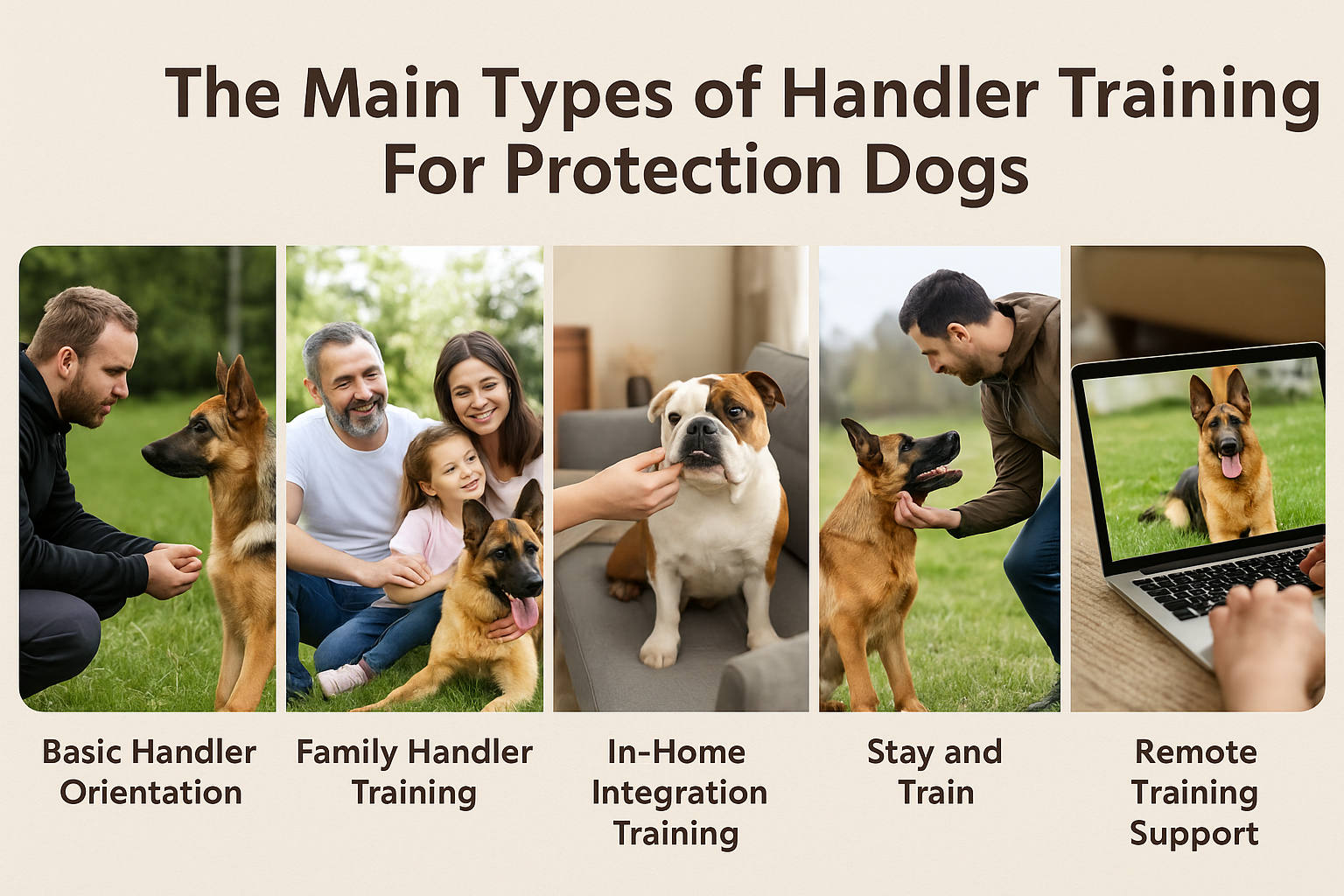
Want pro help? Try our Family Handler Training program to train together with expert support!
1. The “Find Me!” Hide-and-Seek Game 👀
This is a fun way to teach your dog recall (“Come!”) a must for protection dogs.
How to Play:
- Have one family member hold your dog in a “Sit-Stay.”
- Someone else hides nearby.
- Say “Find [Name]!” or “Come!” and let the dog go.
- Reward with hugs, treats, or toys when found.
🔁 Repeat with different hiding spots and family members.
🎯 Teaches: Recall, tracking, family focus
🧠 Level: Beginner to Intermediate
2. Red Light, Green Light 🟢🔴
Teach impulse control while having fun!
How to Play:
- Everyone lines up at one end of the yard.
- The leader shouts “Green Light!”, dogs and people move forward.
- “Red Light!”, dog must sit or down-stay.
- First team to reach the leader wins!
👨👩👧👦 Tip: Pair up kids and dogs for team fun.
🎯 Teaches: Obedience under excitement, impulse control
🧠 Level: Beginner
3. Command Relay Races 🏃🐕
Turn training drills into a high-energy relay!
How to Play:
- Set up cones or markers.
- Family members take turns giving commands (Sit, Down, Come).
- Dog must complete each task before racing to the next family member.
🏆 Use a timer to beat your best score each round!
🎯 Teaches: Multi-person obedience, following in motion
🧠 Level: Intermediate
4. Tug with Rules 💪🦷
Tug is great for bonding and self-control, when done right.
How to Play:
- Use a tug toy (sturdy and safe).
- Say “Tug!” and play.
- Say “Out” or “Drop”, dog must release.
- Reward with another round of tug or treat.
🚨 Never let the dog jump or get wild, keep it structured.
🎯 Teaches: Controlled drive, drop command, safe play
🧠 Level: All Levels
5. Obstacle Course Fun 🛑➡️🏃
Turn your backyard or hallway into a doggy adventure!
Ideas:
- Crawl under a chair 🪑
- Jump through a hula hoop 🎯
- Weave around cones 🌀
- Climb over a log or pillow stack 🪵
Add commands like “Place,” “Jump,” “Wait.”
🎯 Teaches: Agility, listening during movement
🧠 Level: Intermediate to Advanced
6. The “Who’s Got the Treat?” Game 🍪🤔
Teach scent work and focus using treats and family members!
How to Play:
- Everyone holds out fists, only one has the treat.
- Say “Find it!” and let your dog sniff each hand.
- If the dog picks right, they win the treat!
🎯 Teaches: Scent detection, impulse control
🧠 Level: Beginner
Interested in advanced scent skills? Check out our Scent Detection Basics.
7. Toy Treasure Hunt 🧸💎
A great rainy-day game for inside or outside.
How to Play:
- Hide your dog’s favorite toy while they watch.
- Say “Find it!”
- Let them search, if needed, give hints.
- Celebrate big when they find it!
🎯 Teaches: Problem-solving, memory, scent tracking
🧠 Level: Beginner
8. Follow the Leader 👟🐾
Perfect for walks and bonding with young handlers.
How to Play:
- Kids walk around the yard or house.
- Dog must follow closely, on leash or off.
- Add in turns, sits, downs, and stays.
🏃 Bonus: Switch leaders often!
🎯 Teaches: Loose leash walking, handler bonding
🧠 Level: Beginner
9. Bark or Quiet on Command 🔊🤫
Sometimes barking is good. Sometimes it needs to stop fast.
How to Play:
- Get your dog to bark (ring doorbell, say “Speak!”).
- Praise and reward.
- Now say “Quiet.”
- Reward only after silence for 2-3 seconds.
🎯 Teaches: On/off control of barking
🧠 Level: Intermediate
Learn more about barking in our post on Dealing With Boredom Barking.
10. Family Recall Drill 📞🐕
This helps your dog come when called, by anyone in the house.
How to Play:
- Spread out around the yard.
- Take turns calling your dog.
- When the dog comes, give love and a treat.
- Don’t call if someone else already is, wait your turn!
🎯 Teaches: Listening to multiple handlers
🧠 Level: Beginner to Advanced
Game Time Safety Tips 🚨🐶
| Safety Rule | Why It Matters |
|---|---|
| Always warm up your dog | Prevents injury before active play |
| Never leave kids alone with the dog | Even the sweetest dogs need supervision |
| Use soft, non-slip flooring indoors | Keeps dogs safe during turns and jumps |
| Watch for signs of fatigue or stress | Stop if your dog pants, yawns, or avoids |
| Keep high-value treats away from kids | Prevents food guarding or snapping |
Make It a Weekly Family Tradition 🗓️❤️
You can turn game time into something your whole family looks forward to! Try this simple weekly schedule:
| Day | Game |
|---|---|
| Monday | Tug with Rules |
| Tuesday | Follow the Leader |
| Wednesday | Hide-and-Seek |
| Thursday | Red Light, Green Light |
| Friday | Obstacle Course |
| Saturday | Treasure Hunt |
| Sunday | Family Recall Drill |
Rotate or swap games to keep things exciting!
And if you want a dog who’s already trained in family-style obedience, visit https://protectiondogss.com/dogs-for-sale/family-protection-dogs to explore our amazing family-ready dogs.
How We Can Help 🐶📚
At https://protectiondogss.com/, our mission is to make protection dog ownership safe, joyful, and empowering for families in the USA. We offer:
- Family Handler Training
- Protection Dog Training Programs
- Puppy Personalization
- Stay and Train
- In-Home Integration
Whether you’re buying a dog or improving your current one, we’re here to guide every paw step of the way.
FAQs About Family Training Games 🙋♀️🐕
1. Are training games safe for kids?
Yes, with adult supervision. We always recommend starting slow and teaching both kids and dogs how to interact respectfully.
2. What if my dog gets too excited during games?
Pause, have them do a “Sit” or “Down,” then reward calmness. You can always stop and restart later.
3. Can I use toys as rewards instead of treats?
Absolutely! Many protection dogs love tug toys, balls, or praise more than food.
4. My dog only listens to one person—what should I do?
Family recall drills help fix this. Also, let others feed, walk, and train your dog regularly.
5. How old should my kids be to participate?
Ages 5+ can play simple games like Follow the Leader or Tug with Rules—with your help.
6. Will playing too much make my dog less protective?
Nope! In fact, it builds trust and focus, which improves their ability to protect in real situations.
7. How often should we play training games?
2–4 sessions per week is ideal. Keep each game short (10–15 minutes).
8. What if my dog ignores the game?
Try a higher-value reward or simpler version of the game. Or schedule play during higher energy times.
9. Can these games help with anxiety?
Yes! Structured games boost confidence, purpose, and calmness—especially in younger or rescue dogs.
10. Do I need any special equipment?
Not really! Most games need only treats, a leash, or household items like chairs or cones.
11. What breeds enjoy these games most?
Working breeds like German Shepherds, Belgian Malinois, and Dobermans thrive on games and tasks.
12. Can older dogs enjoy these games?
Yes! Just modify movement-based games and use softer commands and rewards.
13. Should I reward after every command?
At first, yes. As your dog improves, use variable rewards for better retention.
14. Can we use these games indoors?
Totally! Just clear space, use soft surfaces, and go for calm games like scent work or Follow the Leader.
15. What if my dog gets competitive or possessive?
Take breaks and use commands like “Leave it” or “Out.” Contact us if you need help managing drive.
Want to raise a happy, obedient, and family-loving protector? Let us help. 🐶🏡