Hi there, dog lovers! 🐕 Today we’re going to talk about a super important topic: preventing bloat in protection dogs. Bloat sounds simple, but it’s a serious condition for dogs, especially larger breeds that are trained to protect our homes and families, like German Shepherds, Dobermans, and Rottweilers. At https://protectiondogss.com/, we care deeply about your dog’s health, so let’s learn how we can keep our furry guardians safe! 😊
What is Bloat, Anyway? 🤔
Bloat, also called Gastric Dilatation-Volvulus (GDV), is when your dog’s stomach fills with gas and twists. Sounds scary, right? That’s because it can be! It blocks the blood flow and can be life-threatening if not treated quickly. But don’t worry! Knowing how to prevent it is the best protection.
Why Are Protection Dogs at Risk? 🛡️🐶
Protection dogs are usually large, deep-chested breeds. Imagine breeds like Belgian Malinois, Cane Corsos, or Great Danes, big chests and strong bodies. Their body shape makes them more at risk for bloat. They also have active lifestyles, which means they eat a lot and move around frequently.
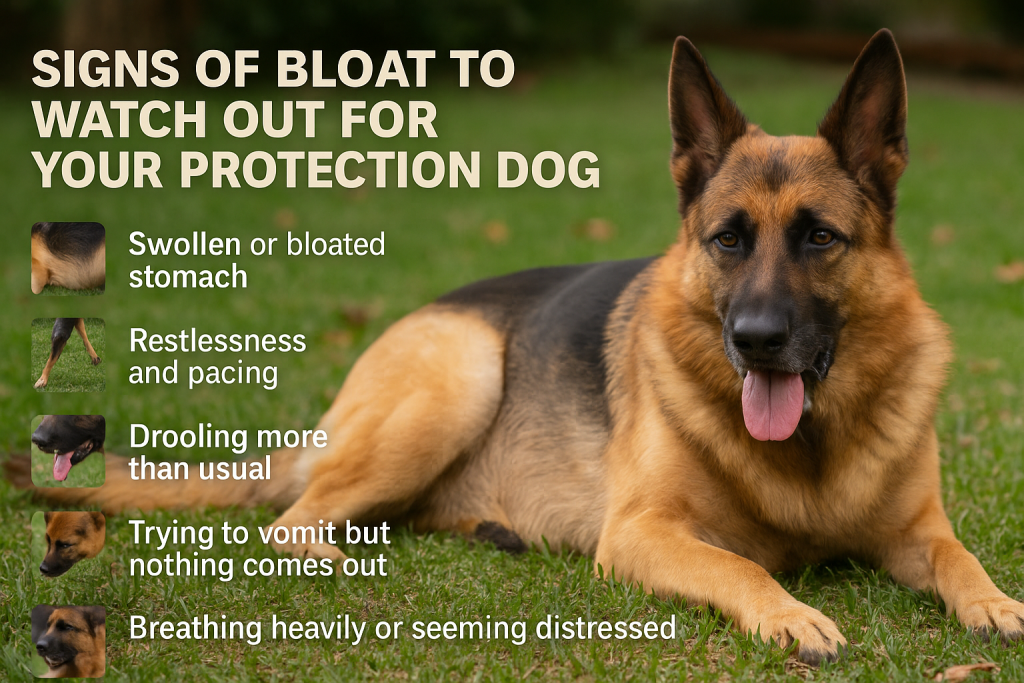
Signs of Bloat to Watch Out For 👀
Knowing the signs can help you act quickly:
- Swollen or bloated stomach
- Restlessness and pacing
- Drooling more than usual
- Trying to vomit but nothing comes out
- Breathing heavily or seeming distressed
If you notice any of these signs, get to a vet FAST!
Easy Ways to Prevent Bloat 🐕🦺💖
Great news! Preventing bloat isn’t hard. Here are some easy steps you can follow:
1. Slow Down Mealtime 🍽️⏰
Fast eaters gulp air, causing gas build-up. Slow them down with special feeding bowls designed to help dogs eat more calmly.
2. Feed Smaller Meals Throughout the Day 🍗🍖
Instead of one big meal, split meals into 2-3 smaller portions. This keeps the stomach from getting too full too quickly.
3. Limit Activity Around Mealtime 🚫🏃
Wait an hour after eating before letting your protection dog run, jump, or play vigorously. This helps digestion happen smoothly.
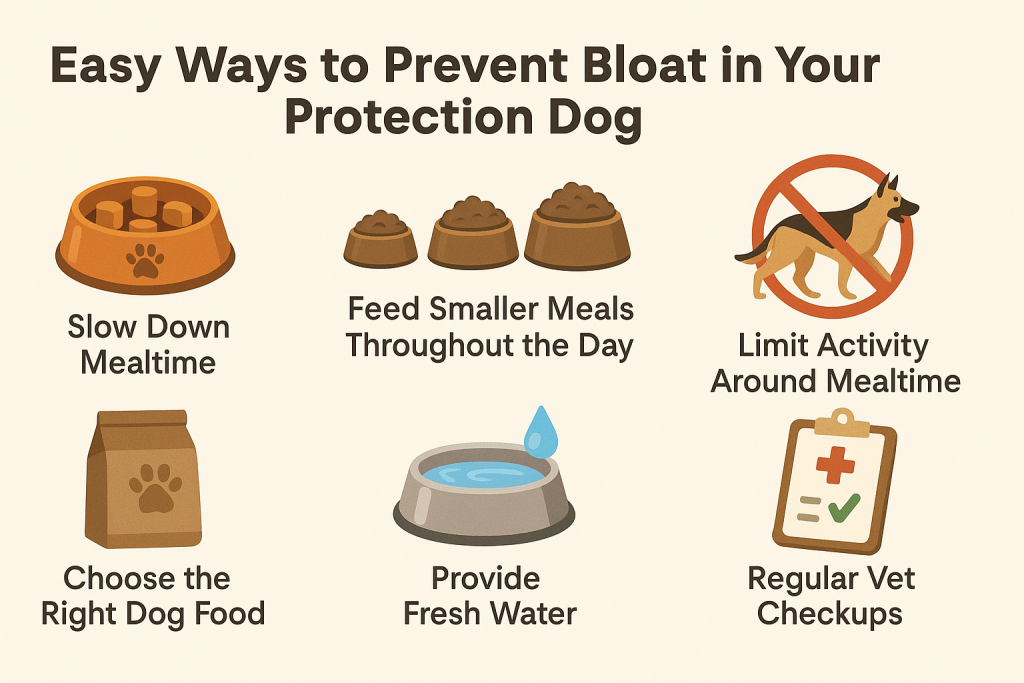
4. Choose the Right Dog Food 🥩🥦
High-quality dog food that’s low in fats and fillers is great for your dog’s digestion. Check out our nutrition guide for more advice: Protection Dog Nutrition.
5. Provide Fresh Water 💧
Keep clean water available all the time, but discourage drinking too much water right after eating.
6. Regular Vet Checkups 🩺
Keep your protection dog healthy with regular visits to the vet. They can spot early signs and help you adjust your dog’s diet and routine if needed. Learn more here: Routine Vet Checkups.
Helpful Products to Prevent Bloat 🎁🐾
| Product | How It Helps | Example Brands |
|---|---|---|
| Slow Feeder Bowls | Slows down fast eaters | Outward Hound |
| Elevated Food Stands | Easier digestion and posture | PetFusion |
| Portion Control Containers | Measures exact meal sizes | Vittles Vault |
| Digestive Supplements | Supports healthy digestion | Zesty Paws |
How https://protectiondogss.com/ Can Help You Keep Your Dog Safe! 🐕✨
At https://protectiondogss.com/, your dog’s health is our priority. We help you choose the best protection dogs, offer expert training, and give you ongoing health and care advice. Our experts know how to prevent issues like bloat, keeping your loyal guardian happy and healthy for years to come!
FAQs About Preventing Bloat (GDV) 📚❓
1. Can bloat be treated at home?
No, bloat needs immediate veterinary care. Always seek professional help quickly!
2. Are smaller dogs also at risk?
Yes, but it’s much less common. Large and deep-chested dogs have the highest risk.
3. Does exercise always cause bloat?
Not always, but vigorous activity right after eating increases the risk. Always wait at least an hour.
4. Can certain dog foods cause bloat?
Foods with fillers and high fats can increase risk. Choose high-quality, balanced diets.
5. Should I use an elevated bowl for my dog?
Elevated bowls can help some dogs digest food easier, but ask your vet if it’s best for your dog’s breed and size.
6. What age do dogs usually get bloat?
Older dogs (7+ years) have higher risks, but it can happen at any age.
You Can Prevent Bloat! 🎉🐶
Bloat might sound scary, but you’re now equipped to keep your protection dog safe! Follow these easy tips, keep an eye on your furry friend’s health, and trust your instincts. At https://protectiondogss.com/, we’re always here to support you in providing the best care possible for your four-legged protector. 🐾💖