Keeping Your Guardian Healthy and Happy!
If you’re the proud owner of a protection dog, you know your furry buddy isn’t just a pet, they’re your family’s bodyguard, best friend, and super athlete! Just like humans, dogs can get sore muscles, achy joints, and injuries. Thankfully, canine physiotherapy can help keep your protector in tip-top shape! Now, we’ll learn about physiotherapy for your protection dog, why it’s important, and how it works. 🐾
🐾 What Is Canine Physiotherapy Anyway?
Physiotherapy sounds fancy, right? But it’s just a special kind of exercise and care to help your dog move better, feel stronger, and heal faster after injuries. Think of it like gym class mixed with gentle massages and exercises specially designed for dogs. 🏋️♂️🐕
🏥 Why Do Protection Dogs Need Physiotherapy?
Protection dogs, like German Shepherds, Belgian Malinois, or Rottweilers, are strong and active! They train hard to keep your family safe. Because they have big responsibilities, they sometimes put extra stress on their muscles and bones. Physiotherapy helps them by:
- Reducing pain after tough training sessions
- Helping them recover from injuries faster
- Keeping their muscles strong and joints flexible
- Improving their performance and energy levels
- Preventing future injuries
At https://protectiondogss.com/, we want your protection dog feeling their best every day. Our experts are always here to help you keep your guardian happy and healthy. 🐾❤️
🦴 Common Issues That Physiotherapy Helps With
Here are some typical problems protection dogs might face:
| Issue | Description | How Physiotherapy Helps |
|---|---|---|
| Hip Dysplasia | Joints don’t fit perfectly | Strengthens muscles around hips |
| Arthritis | Painful, swollen joints | Reduces pain and swelling |
| Muscle Strains | Muscles stretched too far | Helps muscles heal and regain strength |
| Ligament Injuries | Damaged tissues around joints | Improves recovery and prevents stiffness |
At https://protectiondogss.com/services/veterinary-coordination, we work closely with veterinarians and canine physiotherapists to manage your dog’s health.
🐕🦺 Types of Physiotherapy Treatments
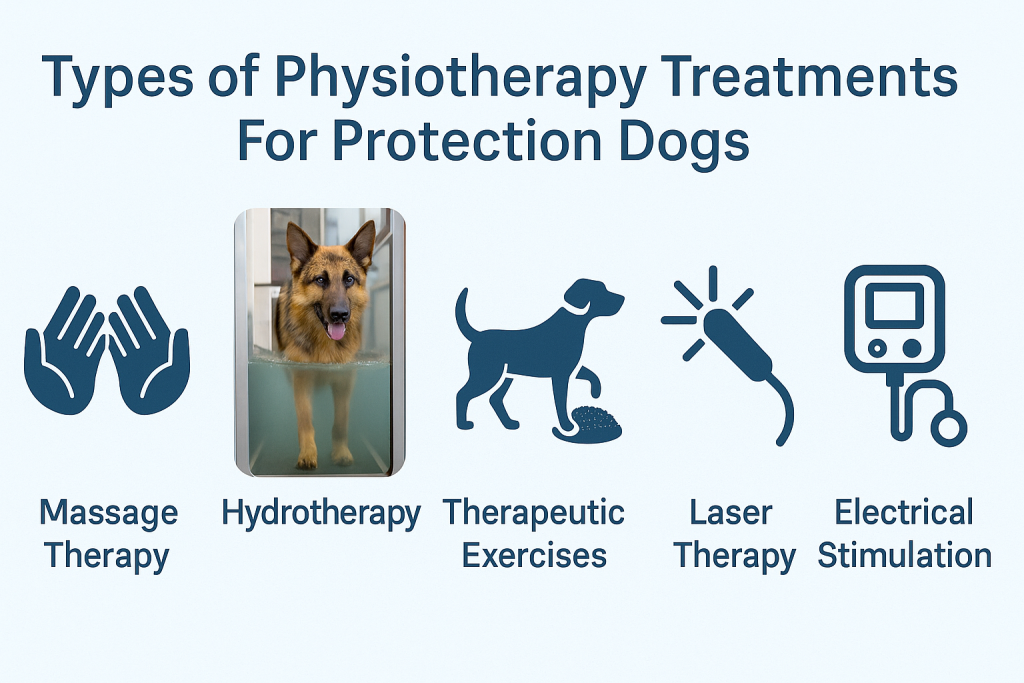
Canine physiotherapy includes several fun and helpful treatments:
1. Massage Therapy 💆♂️
Who doesn’t love a good massage? Massaging your dog can improve blood flow, relieve tension, and help them relax.
2. Hydrotherapy 🌊
Swimming or walking in water! It’s gentle on joints and helps build muscle strength without strain.
3. Therapeutic Exercises 🏃♀️
Exercises like balance training, stretching, and strength-building help your dog stay strong and flexible.
4. Laser Therapy 🔦
Special lasers help reduce inflammation and pain—like magic healing light for your dog!
5. Electrical Stimulation ⚡
Small, safe electric currents gently stimulate muscles and nerves to speed up healing.
At https://protectiondogss.com/services/protection-dog-training, our trainers can also guide you on incorporating physiotherapy exercises into daily routines.
🏠 Can You Do Physiotherapy at Home?
Absolutely! You can do some simple exercises at home with your dog:
- Gentle stretching after playtime
- Slow walks on soft surfaces like grass
- Using balance balls designed for dogs (super fun!)
- Massages to help your dog relax after training
For more detailed help, always consult your veterinarian or a canine physiotherapist. Check out https://protectiondogss.com/blog for more tips!
💡 How Often Does My Dog Need Physiotherapy?
This depends on your dog’s age, activity level, and health conditions:
- Healthy and Active Dogs: Once or twice a month.
- Dogs Recovering from Injury: Once or twice a week.
- Older Dogs with Arthritis or Chronic Pain: Regular sessions once a week or as recommended.
At https://protectiondogss.com/services/k9-health-wellness-program, we help create customized physiotherapy schedules perfect for your guardian’s needs!
🩺 Choosing the Right Physiotherapist for Your Dog
Always look for a professional who:
- Has experience with protection dogs
- Works closely with veterinarians
- Makes sessions enjoyable and stress-free for your dog
Check out our trusted recommendations at https://protectiondogss.com/services/acquisition-advisory.
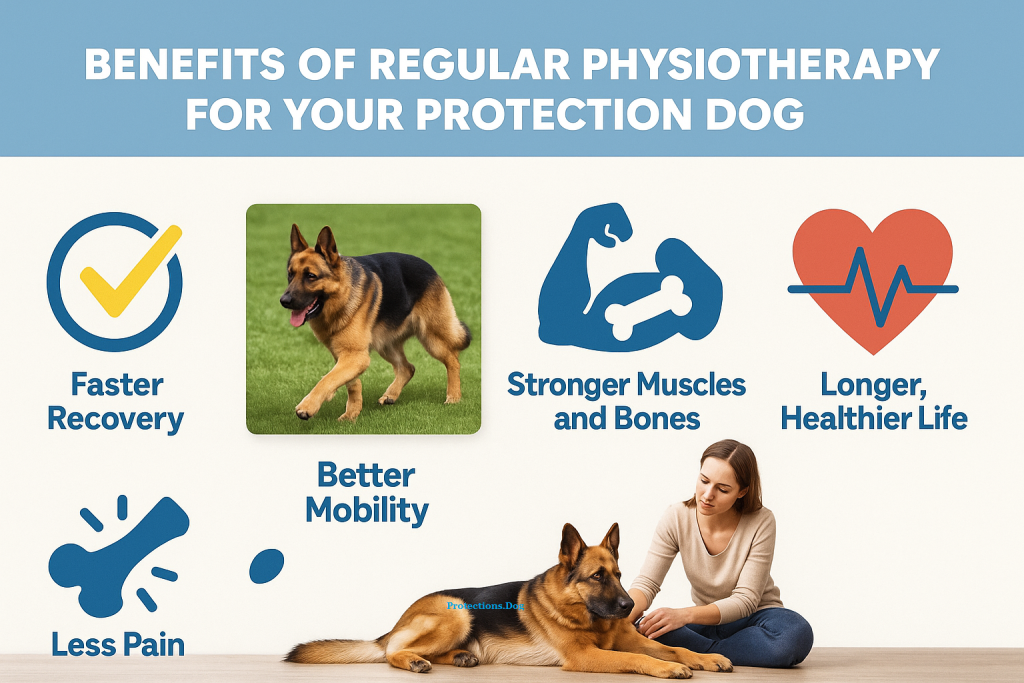
🐾 Benefits of Regular Physiotherapy for Your Protection Dog
- Faster Recovery: Dogs bounce back quicker after tough training.
- Better Mobility: Helps your dog move more easily.
- Stronger Muscles and Bones: Prevents injuries.
- Less Pain: Your dog feels great!
- Longer, Healthier Life: Regular therapy adds years to your dog’s life.
Frequently Asked Questions (FAQs)
What exactly happens during canine physiotherapy?
Your dog gets gentle massages, stretching exercises, and sometimes swims or walks on special equipment to heal faster and feel stronger.
Is physiotherapy safe for all protection dogs?
Yes! When done by professionals, it’s super safe and beneficial for all breeds and ages.
How soon will my dog feel better after physiotherapy?
Most dogs feel better after just one session! Regular visits provide the best long-term results.
Can puppies do physiotherapy?
Absolutely! It’s great for puppies to build strength and prevent future issues.
What if my dog doesn’t like physiotherapy?
Good therapists make it fun and relaxing. Most dogs end up loving their sessions!
How do I start canine physiotherapy?
Visit your vet or contact our specialists at https://protectiondogss.com/contact to get started.
🎉 Keep Your Protector Happy & Healthy!
Your protection dog works hard to keep you safe. Now you know how physiotherapy helps keep them healthy, strong, and happy! Remember, a healthy guardian dog means a safer family. At https://protectiondogss.com/, we’re always here to support you in taking the best care of your furry protector.
Thanks for reading, and give your dog a pat from us! 🐶❤️