Your protection dog isn’t just a pet; they’re your loyal guardian and best friend. Just like superheroes, they bravely protect your family every day. But even superheroes can sometimes face emergencies. Knowing how to help your dog quickly can save their life! Now, we’ll teach you how to be a first responder for your protection dog at home. 🩺🐾
What is an Emergency First Response for Dogs? 🐕
Emergency first response means quickly helping your dog during a serious situation, like an injury or sudden illness, before you reach the vet. Being prepared helps your dog stay calm and safe. Let’s learn more about the most common dog emergencies.
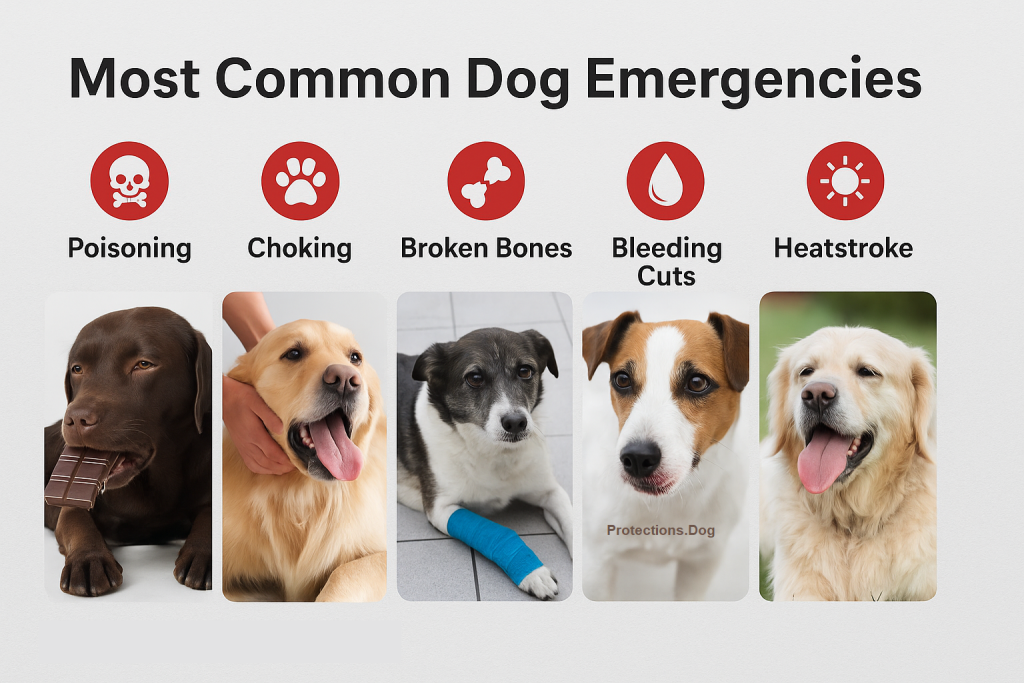
Most Common Dog Emergencies 🚨🐶
| Emergency Type | Symptoms | Immediate Response |
|---|---|---|
| Poisoning 🍫 | Vomiting, shaking, drooling | Call poison control, don’t induce vomiting. |
| Choking 🎾 | Gagging, pawing at mouth | Check mouth carefully, perform dog Heimlich. |
| Broken Bones 🦴 | Limping, swelling, pain | Stabilize limb, restrict movement. |
| Bleeding Cuts 🩸 | Visible bleeding | Press gently with clean cloth. |
| Heatstroke ☀️ | Heavy panting, dizziness, weakness | Move to cool place, offer water slowly. |
💡 Tip: Always keep your vet’s phone number handy and know your nearest 24-hour emergency vet clinic!
Essential Items for Your Dog’s First Aid Kit 🩹🐕
Just like humans, dogs need their own special first aid kits! Keep these items ready at home:
- Gauze pads and bandages
- Non-stick wraps
- Tweezers
- Scissors
- Gloves
- Antiseptic wipes
- Digital thermometer
- Eye wash solution
- Dog-safe hydrogen peroxide (only use if vet-approved!)
- Emergency blanket
Common Emergencies 📝👩⚕️
1. Poisoning 🍇🍫
Did you know chocolate and grapes can be toxic for dogs?
What to Do:
- Call your vet immediately.
- Don’t force your dog to vomit unless directed by a professional.
- Keep packaging of whatever your dog ate for reference.
Our team at https://protectiondogss.com/ can help coordinate emergency veterinary care quickly!
2. Choking 🎾
Dogs love toys, but sometimes they swallow something dangerous.
What to Do:
- Carefully check your dog’s mouth.
- Gently remove the item if visible.
- Perform the Heimlich maneuver if necessary (ask your vet to show you how!).
3. Broken Bones or Sprains 🦴
If your dog gets injured, handle with care.
What to Do:
- Stabilize the limb using a splint or rolled-up newspaper.
- Avoid moving your dog unnecessarily.
- Get immediate vet attention.
4. Bleeding Cuts 🩸
Dogs play hard, and cuts can happen.
What to Do:
- Apply gentle pressure with a clean cloth to stop bleeding.
- Clean the wound gently with water.
- Seek veterinary care if bleeding continues.
5. Heatstroke ☀️
Dogs can quickly overheat in hot weather.
What to Do:
- Move your dog into a shaded, cool area.
- Apply cool (not cold!) water to your dog’s belly and paws.
- Offer small sips of water and call your vet immediately.
Why Protection Dogs Need Extra Special Care 🛡️🐶
Protection dogs, like German Shepherds or Belgian Malinois, work hard to protect their families. They might face more risks because of their protective nature and active lifestyle. That’s why learning emergency first response is extra important!
Training for Emergencies 🎓🐕
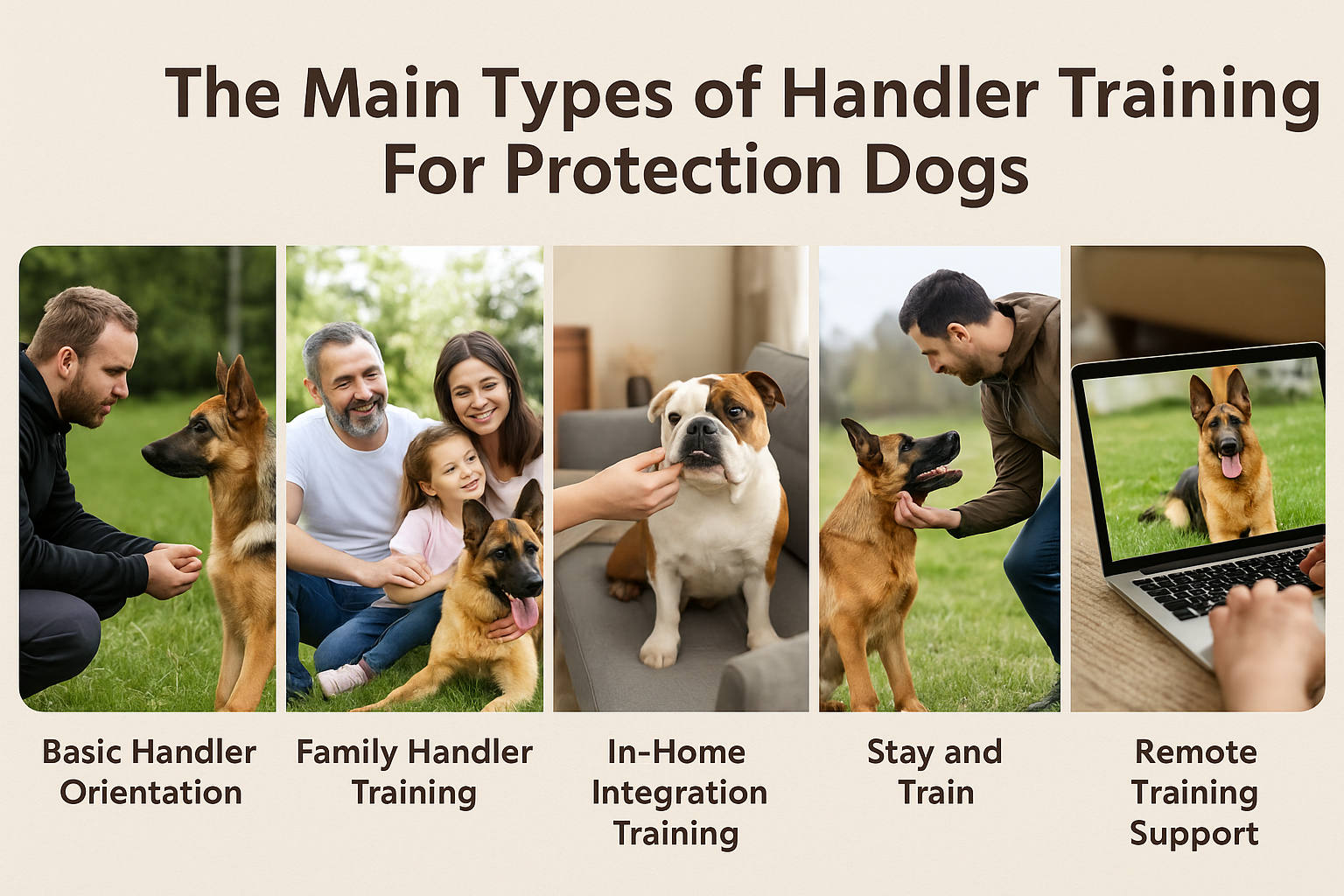
Our experts at https://protectiondogss.com/services/family-handler-training can train your whole family in emergency care. You’ll learn:
- Recognizing signs of distress
- Handling injured dogs safely
- Emergency commands to keep dogs calm
💡 Dogs understand our emotions! Staying calm helps them feel secure during an emergency.
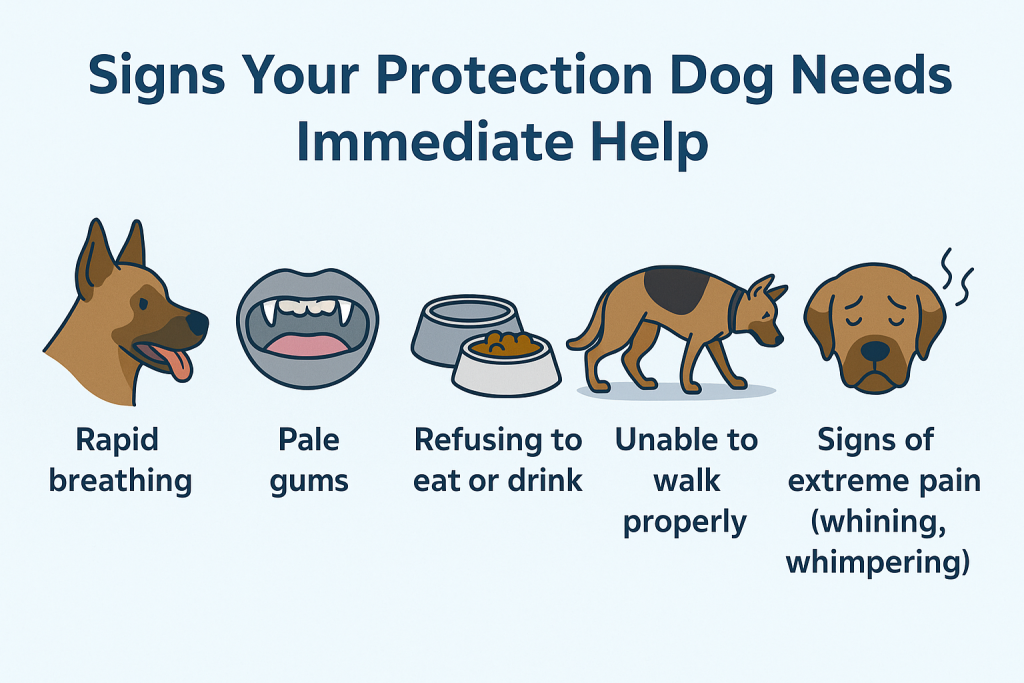
Signs Your Protection Dog Needs Immediate Help ⚠️🐶
Recognizing these signs can help you respond quickly:
- Rapid breathing
- Pale gums
- Refusing to eat or drink
- Unable to walk properly
- Signs of extreme pain (whining, whimpering)
Preparing Your Home 🏠🐕
- Emergency Contacts: Post vet numbers and emergency clinic addresses in visible places.
- Safe Zone: Keep an area where your dog can rest and recover safely.
- Regular Checks: Inspect your home regularly for dangers, like sharp objects or toxic items.
How https://protectiondogss.com/ Supports You in Emergencies 🐶❤️
We offer expert guidance and immediate support for any dog-related emergency through:
- Remote emergency assistance (Remote Training Support)
- Coordination with emergency vets
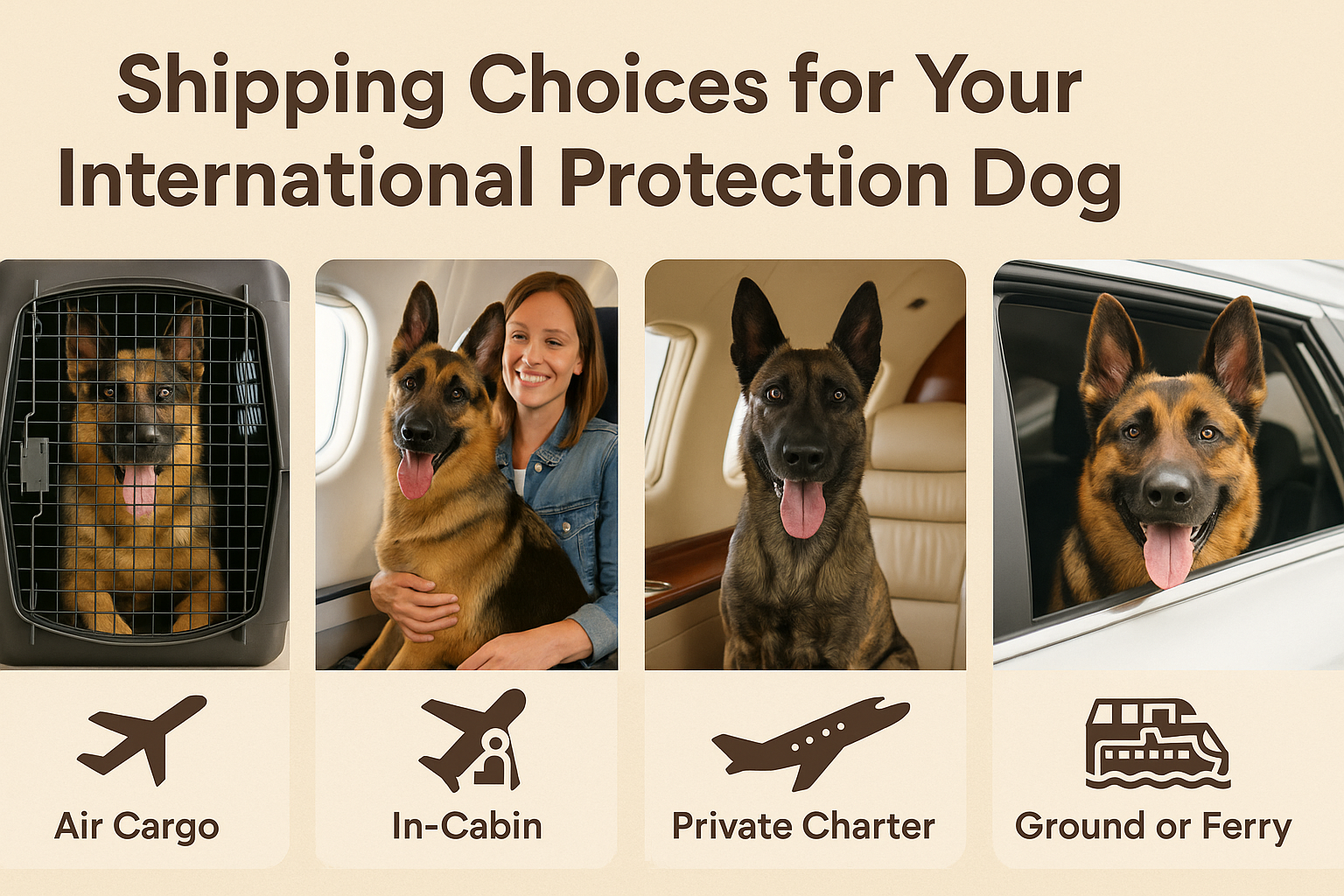
- Emergency transportation services (K9 Transportation)
You never have to face an emergency alone when you have us by your side!
Frequently Asked Questions (FAQs)
1. What should I do first if my dog has an emergency?
Stay calm, assess the situation quickly, and call your vet or emergency clinic immediately.
2. Can protection dogs handle emergencies better than other dogs?
They are trained to remain calm, but they still need your help and immediate medical attention.
3. What if my dog swallows something harmful?
Don’t induce vomiting without talking to a vet. Call your vet or poison control immediately.
4. How can I prevent dog emergencies?
Keep harmful substances out of reach, secure dangerous areas, and regularly check your home.
5. Can children help in dog emergencies?
Yes, with proper training! Our Family Handler Training prepares everyone in your family.
6. Do I need a special vet for protection dogs?
Any good vet can help, but those experienced with working breeds are beneficial. We can recommend trusted vets.
Emergencies can be scary, but knowing what to do helps protect your beloved dog. With the right preparation and training from our experts at https://protectiondogss.com/, you and your protection dog will be ready to face any situation together safely.
Remember, you’re your dog’s superhero too! 🌟🐕💪