For VIPs, executives, estate owners, and high-value families, protection dogs are not only guardians but also valued companions. However, families often ask: “Can my protection dog be considered a service animal under US law?” The answer is important, because the distinction between service animals and protection dogs determines legal access, housing rights, travel privileges, and liability.
At Topcha K9, we specialize in guiding elite families through these differences, ensuring their protection dogs are respected, legally compliant, and seamlessly integrated into estate and travel lifestyles.
Service Animal Laws in the US
The Americans with Disabilities Act (ADA) defines service animals as dogs trained to perform specific tasks directly related to a person’s disability.
Examples include:
- Guiding individuals who are blind.
- Alerting individuals who are deaf.
- Assisting with mobility or medical conditions (like seizures or diabetes).
- Providing psychiatric support through task-based assistance.
Key Legal Privileges of Service Animals:
- Full public access (restaurants, hotels, airplanes, offices).
- Housing protections under the Fair Housing Act.
- Air travel protections under the Air Carrier Access Act (ACAA).
- Employers must provide reasonable accommodation under ADA employment provisions.
Protection Dogs Defined
Protection dogs are trained for security, deterrence, and guardianship. Their tasks include:
- Guarding estates and families.
- Deterring intruders and threats.
- Protecting children during travel or school routines.
- Responding to emergencies and physical confrontations.
Legal Status of Protection Dogs:
- Considered personal property, not medical service animals.
- Not entitled to public access rights under ADA.
- Restricted by housing, insurance, and liability laws.
- Subject to transportation regulations and bite liability statutes.
Service Animal Laws vs Protection Dogs: Key Differences
| Category | Service Animals | Protection Dogs |
|---|---|---|
| Legal Recognition | Protected under ADA and FHA | Not recognized under ADA |
| Primary Role | Assist with disabilities | Provide security and deterrence |
| Public Access Rights | Allowed in restaurants, planes, hotels, offices | Limited, often excluded from public access |
| Housing Protections | Protected under Fair Housing Act | Subject to breed, HOA, and landlord restrictions |
| Air Travel | Guaranteed access under ACAA | Requires private jet arrangements or special compliance |
| Liability | Protected role, but still liable if uncontrolled | Strict liability in many states for bites or incidents |
| Insurance | Covered as service companions | Requires premium liability policies |
Misconceptions Families Should Avoid
Many high-value families assume protection dogs can be treated as service animals, but this is not accurate under US law.
Common Misunderstandings
- “My protection dog protects me, so it’s a service animal.”
- Security tasks are not recognized as medical tasks under ADA.
- “If I call my dog a service animal, I gain public access.”
- Misrepresentation can lead to fines and legal penalties.
- “Protection dogs and therapy dogs have the same rights.”
- Therapy and emotional support animals have limited rights, but still not equal to service animals.
- “VIP families can bypass rules with private agreements.”
- While private estates and jets allow flexibility, public law still applies in hotels, airports, and municipalities.
Housing Implications
Service animals are legally exempt from housing restrictions. Protection dogs, however, face:
- Breed-specific restrictions (German Shepherds, Malinois, Rottweilers).
- HOA or landlord rules.
- Required liability insurance.
Topcha K9 works with families to secure exceptions, negotiate HOA agreements, and align dogs with property rules.
Travel Implications
- Service Animals: Legally allowed in aircraft cabins, trains, buses, and hotels.
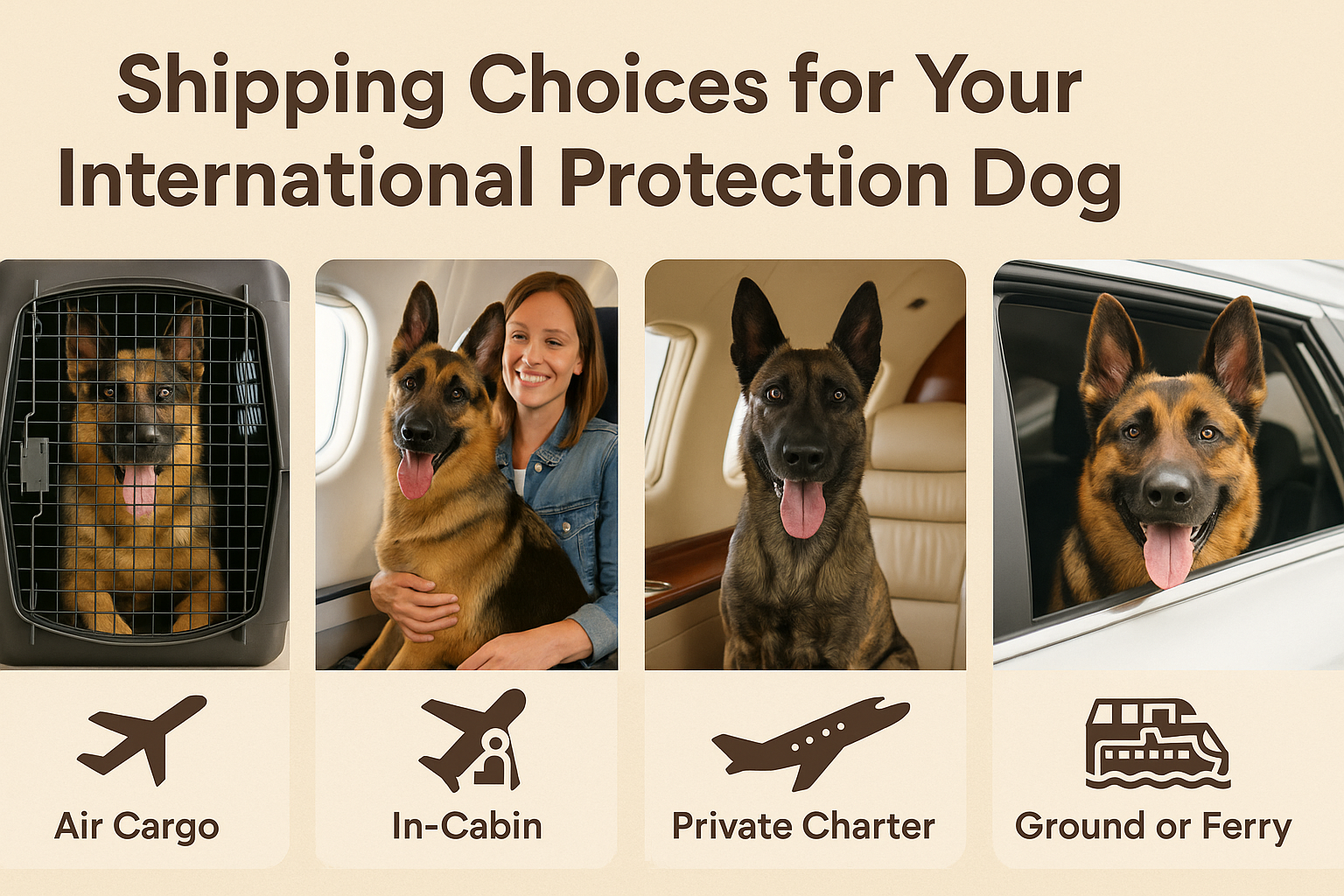
- Protection Dogs: Must comply with transport regulations, often traveling by private jet or in specialized arrangements.
Families with global estates must also consider international restrictions on protection breeds.
Liability Considerations
Protection dogs, due to their advanced bite training, fall under stricter liability laws. Families must:
- Carry premium insurance.
- Maintain detailed training records.
- Ensure estate staff and heirs are properly trained.
Service animals, while still requiring supervision, are afforded greater legal tolerance in public access situations.
Case Study: Executive Family with Both Service and Protection Dogs
A Topcha K9 client in California had:
- A German Shepherd protection dog for estate and travel security.
- A Labrador retriever service dog for a family member with a medical condition.
Key Outcomes:
- The service dog accessed restaurants, hotels, and flights.
- The protection dog accompanied the family only in controlled private spaces, jets, and estates.
- Legal advisors secured premium insurance for both dogs under separate frameworks.
This ensured compliance while maintaining elite security and family wellbeing.
Why Topcha K9 is the Trusted Advisor
Topcha K9 helps elite families navigate not just canine training but also legal realities.
- Legal Awareness: Clarifying ADA, FHA, and liability frameworks.
- Bespoke Planning: Tailoring family security with both service and protection dogs.
- Discreet Guidance: Assisting with housing, insurance, and travel negotiations.
- Global Expertise: Supporting international estates with local compliance.
- Elite Standards: Ensuring both prestige and discretion are upheld.
FAQ
Can protection dogs be classified as service animals?
No. Security roles do not qualify as disability-related tasks under ADA.
Do protection dogs have housing protections?
Not automatically. Families must comply with HOA, landlord, and municipal rules.
Can protection dogs fly in cabins like service animals?
Not under ADA or ACAA. Families often use private jets for travel.
What happens if a family misrepresents a protection dog as a service animal?
Fines, legal action, and potential loss of housing or travel privileges.
Does Topcha K9 provide legal planning for families with both types of dogs?
Yes. We specialize in designing family frameworks for both service and protection needs.
The difference between service animal laws vs protection dogs is critical for elite families to understand. While both serve valuable purposes, their legal status, privileges, and restrictions differ significantly. Misrepresentation or misunderstanding can lead to liability, fines, or reputational harm.
At Topcha K9, we guide VIP, estate, and executive families through this complex landscape. Our expertise ensures that protection dogs are honored as elite guardians, while legal compliance is maintained in housing, travel, and daily life.
For families who demand clarity, security, and prestige, Topcha K9 is the global leader in integrating service animal laws and protection dog realities into one seamless family lifestyle.