Imagine this: your loyal protection dog listens to you perfectly… but freezes or gets confused when your partner or child calls their name. 😬 Uh-oh! In real-life emergencies, we want our protection dogs to respond equally well to more than one person, this is where dual-handler transition training comes in. 💡
Whether you’re sharing dog duties with a spouse, co-parent, bodyguard, or nanny, we’ll help you to training a protection dog to obey and protect multiple handlers safely and confidently.
What Is Dual Handler Transition Training? 🤝🐕
Dual handler transition training teaches a protection dog to:
- Obey two or more handlers consistently
- Stay calm and focused when switching handlers
- Follow the same commands no matter who gives them
- Avoid confusion, hesitation, or mistrust 🧠
Why is this important? Because life gets busy! You may not always be home. Someone else might take your dog on a walk, greet a guest, or even respond during an emergency. That’s why protection dogs must respond the same way to all approved handlers, not just their favorite one 🥇.
When Should You Start This Training? ⏱️
It’s best to start early, ideally when your dog already knows basic obedience and has bonded with their primary handler. Most dogs can begin dual-handler training between 6-12 months old 🐾. But even adult dogs can learn, it just takes a bit more patience!
We at https://protectiondogss.com/ recommend introducing dual-handler work during:
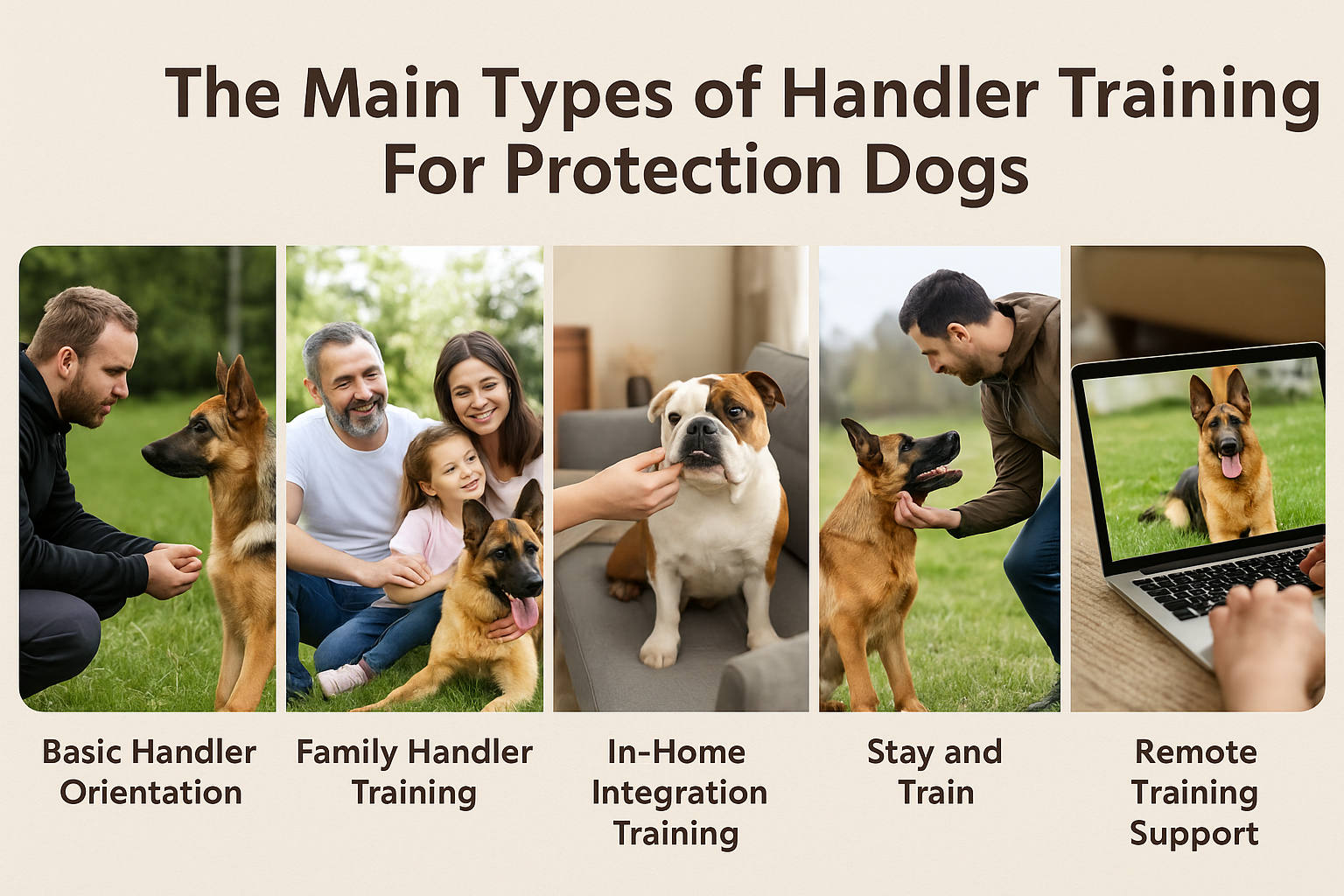
- Family handler sessions: Family Handler Training
- In-home integration: In-Home Integration
- Transition from professional trainer to new home: In-home delivery + transition support
Why Single-Handler Dogs Can Struggle 😕
Dogs are super loyal. If they’ve only trained with one person, they learn to trust and obey that person only. Here’s what can go wrong:
| Issue | Example | Solution |
|---|---|---|
| Selective listening | Dog listens to Dad, but ignores Mom 😬 | Shared feeding, training, bonding routines |
| Confusion or anxiety | Dog looks panicked when given a new command from someone else 🌀 | Repetition, reward-based learning with second handler |
| Guarding behavior | Dog “protects” one person and won’t let others near 👮 | Controlled exposure to shared affection and commands |
Don’t worry, we’ll show you how to fix all that! 😊
Step-by-Step Dual Handler Transition Plan 🗂️
Here’s the system we use to help your protection dog become a two-handler superstar ⭐:
1. Pick a Second Handler 👩👨
Choose someone your dog already knows and trusts—like a spouse, teen, or professional staff. Avoid introducing a brand-new stranger at first. They’ll build trust faster if the bond already exists!
2. Share the Routine 🕒
Start by having both handlers do:
- Walks 🚶♂️
- Mealtimes 🍽️
- Play sessions 🧸
- Simple obedience like “Sit,” “Stay,” and “Come”
Pro tip: Rotate roles daily! Monday: You feed. Tuesday: Your partner feeds. Wednesday: Your child walks. Thursday: You walk. Sharing routines builds shared respect 💞.
3. Match Commands 🎤
Everyone must use the same exact words, tone, and hand signals. If you say “Down” but your partner says “Lie down,” your dog might get confused. Pick one command sheet and stick with it!
We offer downloadable cue sheets and command guides inside our Family Handler Training package 📝.
4. Train Together 👯♂️
Practice together, side by side. Here’s an easy exercise:
- Handler 1 gives a command (“Place”)
- Dog follows
- Handler 2 repeats the command 5 seconds later
- Praise, reward, repeat! 🎉
This builds trust and teaches your dog that both people give the same good stuff.
5. Gradually Switch Roles 🔄
Start transferring leadership:
- Have the second handler give harder commands
- Let them lead walks and training
- Use positive reinforcement for responding correctly
If the dog hesitates, don’t scold, just guide gently, and reward when they succeed 🦴.
What About Protection Commands? 🛡️
Yes! Even personal protection dogs can be trained to respond to more than one protector.
Commands like:
- “Watch” 👀
- “Out” (release) ✋
- “Bark” 🗣️
- “Heel” 🚶
- “Guard” 💂
…can all be shared between handlers. But here’s the key: timing and tone must be consistent.
We train all protection dogs for sale with multi-handler setups in mind. So if you buy from https://protectiondogss.com/, your dog is already familiar with this kind of work.
Do’s and Don’ts for Smooth Transitions ✅❌
| Do | Don’t |
|---|---|
| Practice every day | Skip days, it breaks momentum! |
| Keep commands identical | Let family invent new words 😅 |
| Use calm, confident tone | Sound nervous or unsure 😟 |
| Let second handler reward success | Only first handler gives praise 🙅 |
| Switch up duties (feeding, walking) | Let only one person do everything 💤 |
Real Life Example 🐾🏡
Meet “Bruno” a Belgian Malinois trained by Our Company. His primary handler was Dad, but the family wanted their teenage daughter to take over walks while Dad traveled.
We used our dual-handler program to slowly introduce her as a co-leader:
- First, she fed Bruno daily 🥩
- Then, she joined training drills as a helper 🤝
- After 2 weeks, she gave commands solo
- Within 4 weeks, Bruno obeyed her just like Dad!
Now, Bruno listens equally to both, and that’s real family safety ❤️.
How We Can Help at https://protectiondogss.com/ 🚀
We specialize in smooth, professional dual-handler transitions.
Here’s what we offer:
- 🧠 Handler Training: Learn how to speak your dog’s language, together
- 🏠 In-Home Integration: Trainers guide your family step-by-step in your home
- ✈️ VIP Travel Support: Traveling or relocating? We’ll hand-deliver your dog and train everyone on-site
- 🔁 Training Refresh: Need help months later? We offer re-training to fine-tune dual handling
- 🦴 Personalized Dog Matching: We pick dogs who love families and work well with multiple people
Explore all our services at https://protectiondogss.com/services
Common Questions & Challenges 🧠
Here’s a helpful table of tricky situations and what to do:
| Problem | Why It Happens | How to Fix |
|---|---|---|
| Dog only listens to one person | Primary handler bonded too strongly | Introduce shared feeding, walks, and fun time |
| Dog gets nervous with second handler | Lack of trust or past inconsistency | Build slow confidence with small wins |
| Dog guards one person too much | Overprotection instinct kicks in | Practice calm social greetings with both handlers present |
| Handlers use different cues | Human confusion = dog confusion | Use written command sheet, review daily |
| Dog obeys but looks confused | Trust is there, but clarity isn’t | Use clear body language + same tone of voice |
FAQ (Frequently Asked Questions) 🙋♀️
What age should I start dual-handler training?
Between 6-12 months is great! But adult dogs can learn too with patience.
Is this safe for kids to participate in?
Yes, age 5+ with adult help. We train kids and dogs to work together safely.
What if my dog gets confused switching handlers?
That’s normal at first! Just be patient and consistent. Confidence will grow.
Can I use different commands than my spouse?
Nope! Always use the same word, tone, and reward style. Dogs love consistency.
How long does this take to work?
Most dogs adjust within 3–6 weeks if you practice daily and use rewards.
Do your dogs come trained for this already?
Yes! Our family protection dogs are raised with multiple handlers in mind.
What if my dog still ignores my partner after training?
Let us help! Our Training Refresh program includes dual-handler troubleshooting and support.
Can I add a third handler later (like a nanny or bodyguard)?
Absolutely. Just follow the same system: build trust, share duties, and use the same cues.
Protection dogs are amazing partners, but only when the whole family feels confident giving commands. 🎤 With proper dual-handler transition training, your dog becomes not just a bodyguard, but a trusted family member for everyone.
You don’t need to do it alone! At https://protectiondogss.com/, we’re here to help you every step of the way with:
✅ Proven methods
✅ Professional trainers
✅ Family-focused systems
✅ Lifetime support
Ready to build teamwork, trust, and full control? 🐾
Explore our full programs or schedule a consultation today!